
How to Make a Money Vision Board: A Beginner’s Step-by-Step Guide (2026)
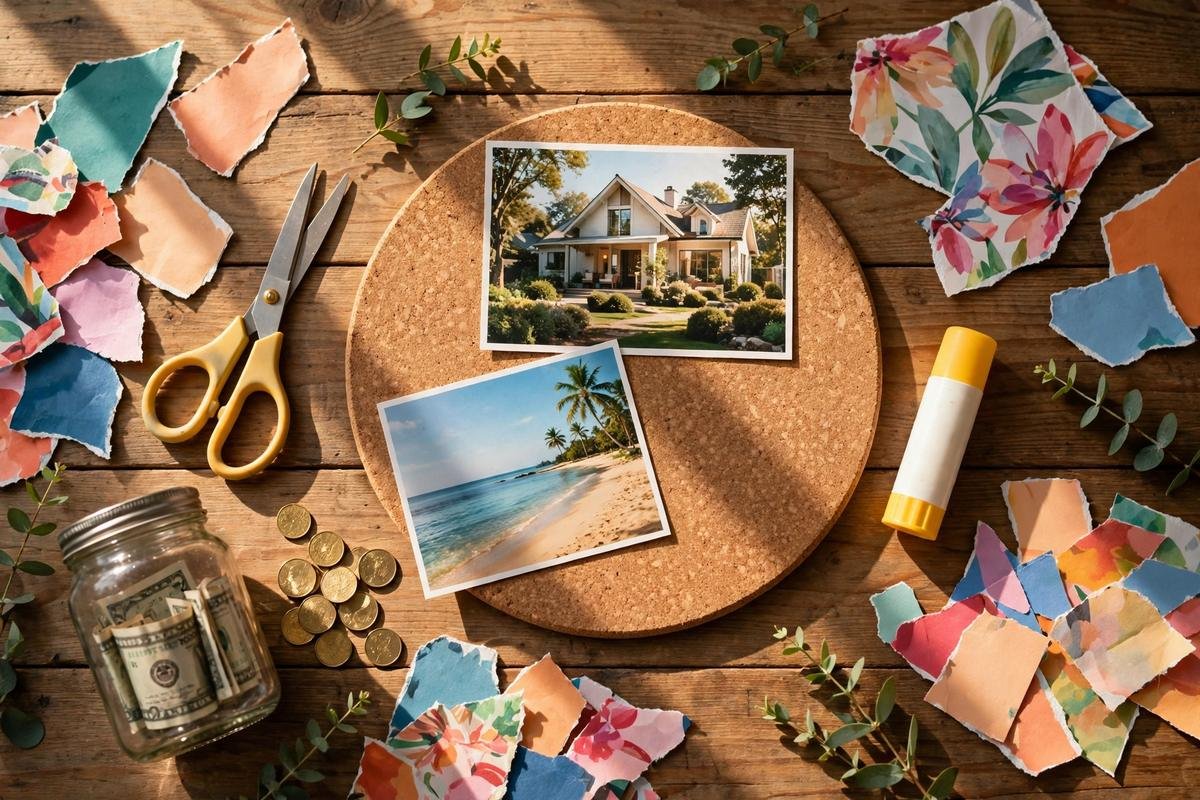
Money goals live in your head. They feel abstract. A number on a screen. A wish at night.
A money vision board pulls those goals into the real world. You see them. You touch them. You walk past them every day.
This guide shows you how to make a money vision board from scratch. You will learn the 7 steps, what to put on your board, and the mistakes to skip. Manifestation Soul keeps it honest — clear steps, real research, no magic claims.
- A money vision board is a visual collage of your financial goals — pictures, words, and numbers — placed where you see it every day.
- No study proves a board attracts money. Research backs the building blocks: written goals were 42% more likely to be reached (Dr. Gail Matthews, Dominican University, via Inc.com); vivid mental imagery alone raised finger strength 35% (Ranganathan et al., 2004, in Neuropsychologia).
- Seven steps: pick one exact goal, gather images that spark feeling, add words and numbers, arrange before gluing, leave white space, hang it where you see it, and look daily while taking real action.
- A board works through clarity, attention, and action — not magic. Expect mindset shifts in 1–2 weeks and real money changes over months.
Table of Contents
What Is a Money Vision Board?
A money vision board is a collage of pictures, words, and numbers that show your financial goals. You pin them on a physical board or build one on your phone. Then you place it where you see it every day. It works as a daily visual reminder of what you want — not as magic.

The idea became popular in the 2000s. Books and films about the law of attraction made vision boards famous. The basic idea is simple. You choose images of the life you want. You look at them daily. You stay focused.
A money vision board focuses only on finances. Not love. Not fitness. Just money goals. Examples: a paid-off credit card, a savings number, a new income stream, a debt-free life.
You can build one two ways. A physical board uses a poster board, magazines, scissors, and glue. A digital board uses a free app like Canva. Both work. Pick the one you will actually look at.
Do Money Vision Boards Actually Work?
Here is the honest answer. No peer-reviewed study proves that a vision board attracts money. Anyone who claims proof is selling something. But the smaller claim is true: solid research supports the building blocks. People who wrote their goals down were 42% more likely to reach them, in a study by Dr. Gail Matthews at Dominican University (summarized by Inc.com). And vivid mental imagery alone raised finger strength by 35%, in a 2004 study by Ranganathan and colleagues, published in Neuropsychologia.
So what does this mean for your board? It means the board is a tool, not a spell. It combines three proven helpers: written goals, visual reminders, and daily attention.
Here is how the tool works in plain words. First, it creates clarity. You must choose exact images. Vague wishes become sharp targets. Second, it trains attention. Your brain has an attention filter. It notices what you focus on. Daily viewing keeps money goals in that filter. You spot chances you would have missed. Third, it feeds action. A clear goal makes the next step obvious.
Reviewers of the mental-imagery research put it well: vivid imagery changes the brain’s output (systematic review, PMC). That does not prove a board attracts cash. It proves the mind responds to what it pictures. A vision board is organized, daily picturing.
Now the hard truth. A board plus zero action equals decoration. The people who get results pair the board with real moves: saving, earning, asking, learning. Keep that deal with yourself from day one.
What Do You Need to Make a Money Vision Board?
For a physical board, you need a poster or cork board, scissors, glue or pins, and old magazines or printed photos. For a digital board, you need a free design app and a folder of saved images. The total cost can be zero — use what you already have.
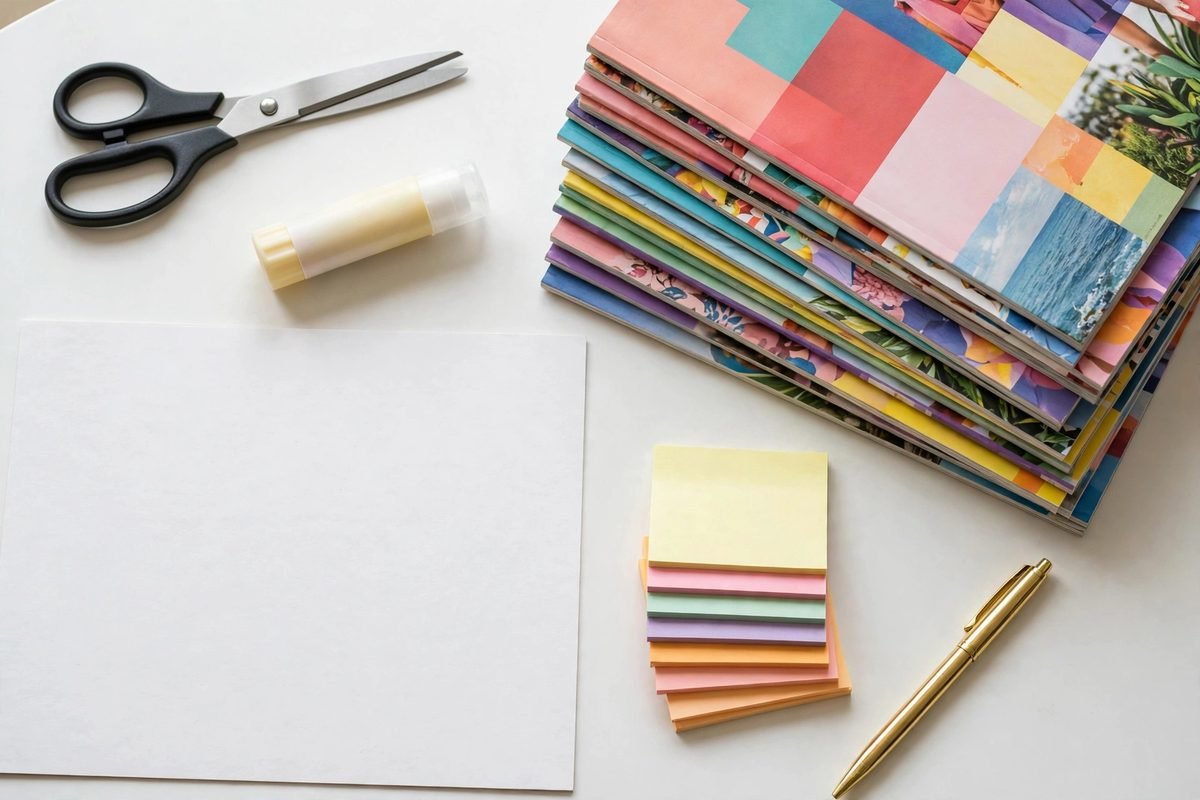
Here is a quick comparison.
Physical board
- Pros: tactile and fun to make; no screen needed; feels “real” on your wall.
- Cons: takes more time; needs supplies; hard to update.
- Best for: people who love crafts and want a weekend project.
Digital board
- Pros: free and fast; easy to update; works as a phone wallpaper you see 50 times a day.
- Cons: less hands-on; easy to ignore on a crowded home screen.
- Best for: beginners who want to start today.
Optional extras: a gold pen for writing amounts, stickers for fun, washi tape instead of glue. None of these are required. A plain board and clear images beat a fancy board with vague pictures.
Want a full walkthrough with a money focus? This financial vision board guide shows another beginner-friendly approach you can borrow ideas from.
How Do You Make a Money Vision Board? 7 Steps
Follow these seven steps in order. Set aside one calm hour. Rushing a vision board defeats its purpose. Each step builds on the last, from one clear goal to a board you will actually use daily.
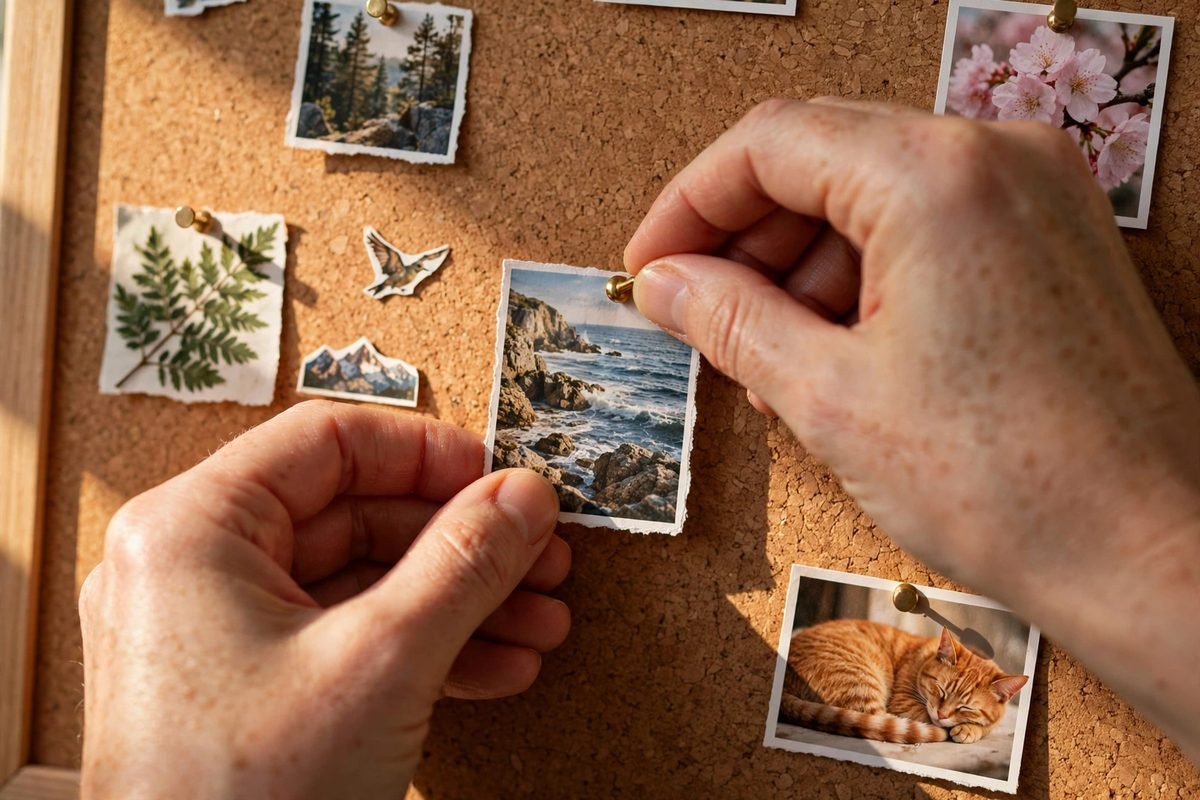
Step 1: Pick ONE money goal
One goal beats five wishes. Write it with a number and a date. “Save $5,000 by June 2027.” Not “be rich someday.”
Why one? Focus is the whole point. Five goals split your attention. One goal sharpens it. You can make a new board when you hit this one.
Step 2: Gather images that make you FEEL something
Cut or save 10–15 images. Look for a physical reaction. A smile. A deep breath. Excitement. That feeling is the test. Skip anything that leaves you cold.
Choose specific over generic. A photo of the exact car model beats a random sports car. Your dream neighborhood beats a stock mansion. Your brain trusts real details more than fantasy.
Step 3: Add words and numbers
Pictures grab attention. Words give direction. Write your goal in present tense: “I am debt-free.” “My savings grow every month.” Add real numbers: “$5,000.” Add the date.
This step matters most. Remember the Dominican University research: written goals outperform wishes. Put your written goal on the board itself.
Step 4: Arrange before you glue
Lay everything out first. Move pieces around. Step back. Look. Edit. Remove anything weak. Glue only when the layout feels right.
Put your main goal image in the center. It is the star. Supporting images go around it. Words sit where your eyes land first.
Step 5: Leave white space
Do not fill every inch. A crowded board confuses the eye. White space gives each image room to breathe. If your brain cannot focus on one thing, it focuses on nothing.
A good rule: if you must search to find your main goal, remove half the board.
Step 6: Put it where you will see it daily
A board in a closet is a forgotten board. Hang it where you start your day. Your bedroom wall. Your desk. Your fridge. For digital boards, set it as your phone wallpaper.
Visibility is non-negotiable. The board only works through daily contact. Choose the spot you cannot avoid.
Step 7: Look, feel, then act
Your board is built. Now use it. Each morning, look at it for two minutes. Pick one image. Feel it as already done. Then choose one small money action for the day.
The action can be tiny. Save $5. Cancel a subscription. Send one pitch. Small moves compound. The board keeps the goal visible. Your actions move it forward.
A vision board works best with a clear money mindset. Read how to remove money blocks, then see how to manifest money fast for 7 beginner techniques that pair perfectly with your board.
What Should You Put on Your Money Vision Board?
Put specific images of outcomes you want — the exact house, not a mansion. Use words in present tense, like “I am debt-free.” Add real numbers with dates, like “$5,000 saved by June 2027.” Include symbols of freedom, like travel or time with family. Skip generic luxury shots that spark envy instead of action.
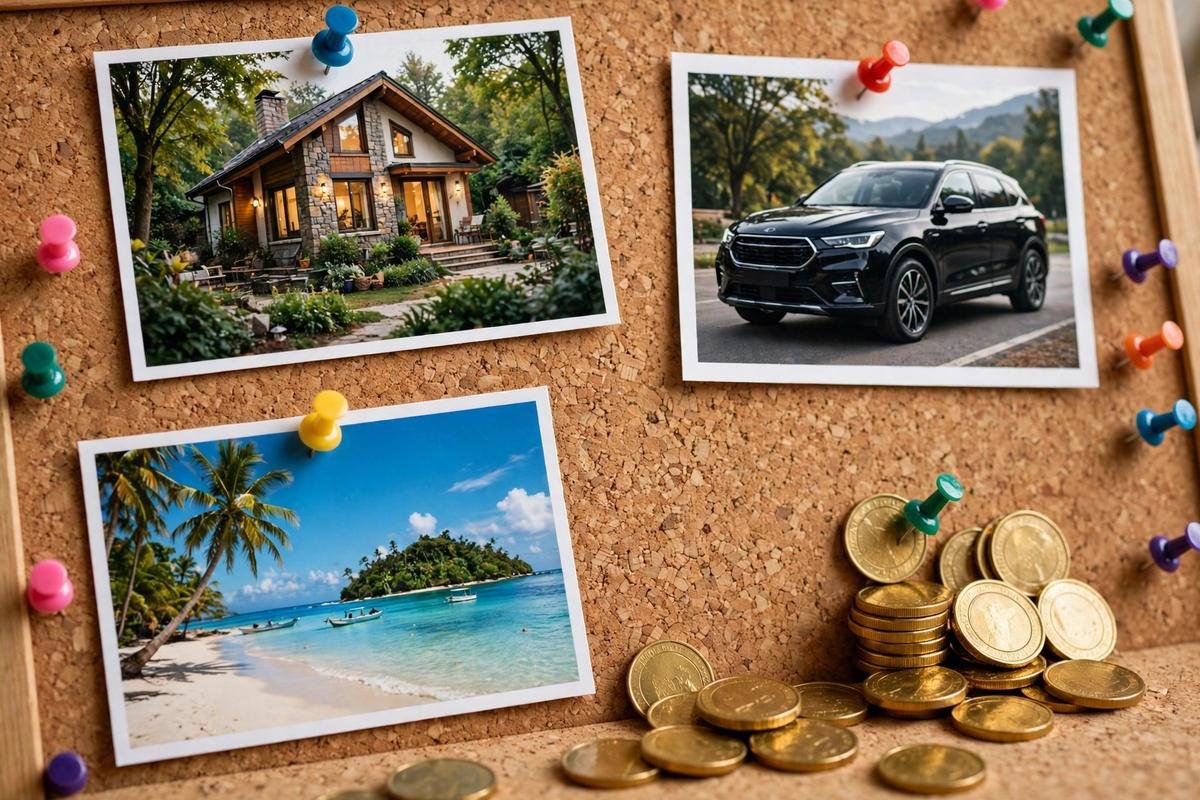
Here are beginner-friendly ideas for each money goal type:
- Saving: a savings jar filling up, your target number in big digits, a calm emergency-fund feeling.
- Debt freedom: a shredded bill, a zero balance, the words “debt-free” in present tense.
- Income growth: your pay stub with a higher number, a thriving side business, a new skill certificate.
- Freedom: a beach morning, working from a café, more time with your kids.
- Giving: a charity you love, a gift you want to give, generosity as a wealth symbol.
Use the feeling test on every item. Hold it up. Ask: “Does this make me feel the goal is mine?” Keep it only if the answer is yes. This one filter removes 90% of weak images.
One more tip. Add one image that represents your why. The reason behind the money. Freedom. Security. Your kids’ future. Your why keeps you going when the novelty fades.
What Mistakes Should You Avoid?
The five board-killers are clutter, hiding the board, fantasy-only images, no written goal, and zero action. Each one is easy to fix once you see it. Check your board against this list before you call it done.

Mistake 1: Clutter. Thirty images fight for attention. None wins. Fix: keep 5–10 strong images. Remove the rest.
Mistake 2: Hiding it. A board in a drawer cannot remind you of anything. Fix: hang it where your eyes land daily.
Mistake 3: Fantasy-only images. Private jets and yachts feel fake to a beginner brain. Disbelief kills motivation. Fix: choose images one step above your current life, not ten.
Mistake 4: No written goal. Pictures without words are just decoration. Fix: write your exact goal, amount, and date on the board.
Mistake 5: Zero action. Looking without doing changes nothing. Fix: pair every viewing with one small money move.
Beginners also ask: should I include other people’s luxury photos? Skip them. Comparison drains you. Your board should inspire your goals, not someone else’s highlight reel.
How Do You Use Your Vision Board Every Day?
Spend two minutes each morning looking at your board. Pick one image. See it as already done. Feel the relief, the pride, the calm. Then choose one small money action for the day. Glance at the board again at night. The board is a prompt for focus — not a ritual to worship.

Here is a simple 2-minute morning routine:
- Minute 1: Look slowly across the board. Let your eyes rest on your main goal image.
- Minute 2: Close your eyes. Picture the goal as done. Feel one emotion: relief, pride, or gratitude.
- Then: Name one money action for today. Write it down. Do it before noon if you can.
At night, take 30 seconds. Glance at the board. Note one money win from the day, even a tiny one. This trains your brain to spot progress. Progress fuels consistency.
What if you miss a day? Nothing breaks. Just look again tomorrow. Consistency over months matters. Perfection does not.
Pair your board with money manifestation while you sleep, or try the 369 manifestation method as a daily writing habit alongside your board.
How Long Before You See Results?
Expect mindset shifts in 1–2 weeks: clearer goals, sharper attention, braver actions. Small money wins often show up within 30 days. Bigger changes — new income, real savings — usually take 2–3 months of daily practice plus action. If nothing changes after 90 days, your goal is too vague or your actions are missing. Revise, do not quit.
Here is a realistic timeline:
- Week 1–2: Clarity. You think about your goal more. You notice money leaks.
- Month 1: Small wins. A refund, a saving, a new idea, a bolder move.
- Month 2–3: Compounding. Habits stick. Income or savings start to move.
- Month 6+: Review. Update the board. Set the next goal.
Judge the board fairly. Compare against doing nothing, not against lottery dreams. A system that makes you save $200 a month is life-changing over years. That is the real power of a vision board.
Frequently Asked Questions
Can I make a digital vision board on my phone?
Yes. Use a free app like Canva. Save images to a folder. Arrange them on a phone-sized canvas. Set the result as your wallpaper. You will see it dozens of times a day. It costs nothing and takes under an hour.
How often should I look at my vision board?
Once a day is enough. Two focused minutes each morning beat an hour of staring once a week. Add a quick 30-second glance at night. Daily contact keeps the goal in your attention filter.
Do I have to believe in the law of attraction for this to work?
No. You only need to believe in focus and action. The board organizes your goals visually. Daily viewing keeps them top of mind. Top-of-mind goals get more action. That mechanism works whatever your beliefs.
What if I cannot find the right images?
Use close-enough images. Search free photo sites. Print from your phone. Draw simple sketches — they work too. The feeling matters more than perfect pictures. Upgrade the images later when you find better ones.
Should I share my vision board on social media?
That is your choice. Sharing can add accountability. But it can also invite doubts and pressure. Many people keep their board private. If you share, share the making of it, not your exact money numbers.
When should I update my vision board?
Update it when a goal changes or gets achieved. Review it every 3 months. Remove what no longer fits. Add the next goal. A living board stays motivating. A frozen board becomes wallpaper you stop seeing.
Is a money vision board against any religion?
A vision board is a focus tool, not a religion. It contains pictures and written goals. People of many faiths use similar tools — written prayers, goal lists, dream maps. If anything conflicts with your beliefs, adapt it. The tool serves you, not the other way around.
What if nothing changes after three months?
Do not quit — diagnose. First, check your goal: is it exact, with a number and date? Second, check your actions: did you take one money move most days? Third, check visibility: did you actually look at the board daily? Fix the weak link. Then give it another 90 days.
Join 10,000+ Manifestors
Get weekly manifestation tips, powerful affirmations, and exclusive resources delivered straight to your inbox.




[…] money mindset work without a product, read our guide to removing money blocks and our money vision board guide. Both are free to read and need no […]
[…] realistic view of timelines. Read How to Remove Money Blocks for free steps you can use today. Read How to Make a Money Vision Board to keep your goal in […]
[…] board, place the stone beside it. The stone and the board then cue the same goal. See our guide on how to make a money vision board for the full […]